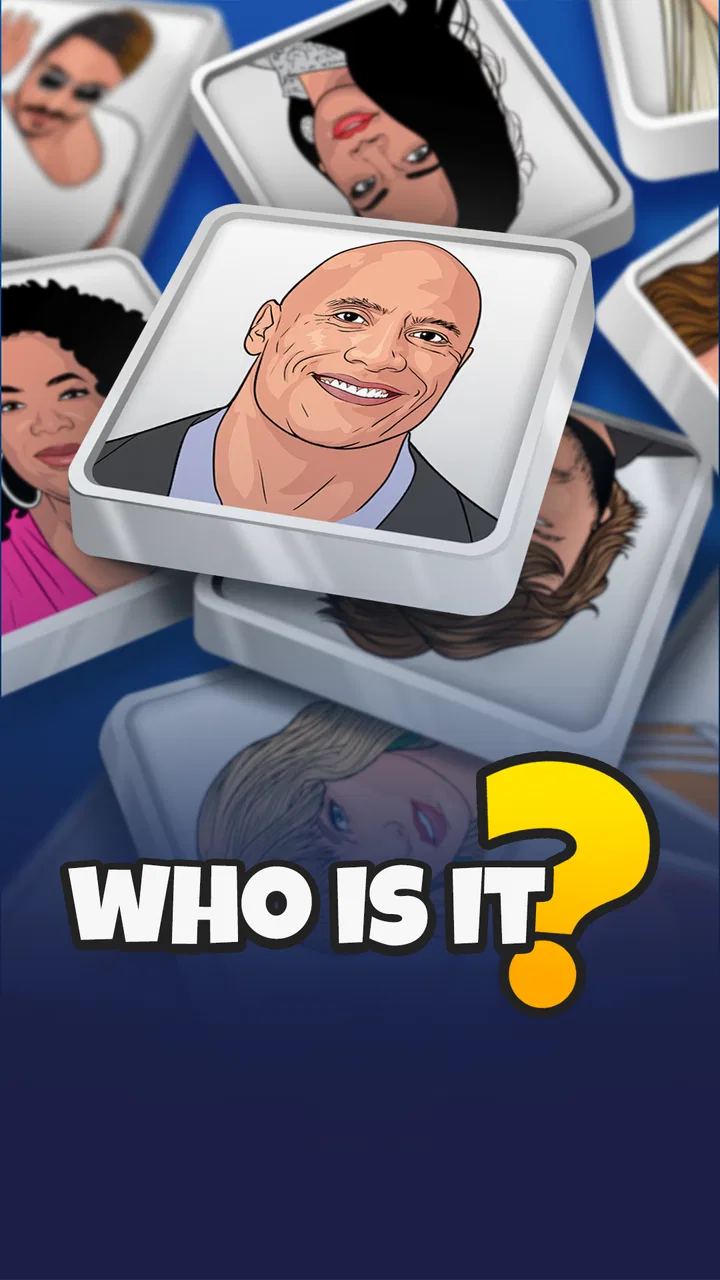
Who is it? Celeb Quiz Trivia
- 4.8
- Rating
- 5.00M
- Installs
- Free
- Price

 Analysis by App-foxy
I went into Who is it? Celeb Quiz Trivia expecting a simple celebrity guessing game, and that is exactly where its appeal begins. It does not ask me to learn a complicated ruleset before I can have fun. The central idea is immediate: look at the clue or image, decide which famous person it points toward, and make a choice before moving on. That quick understanding makes it easy to pick up during a short break, while the trivia format gives each correct answer a small burst of satisfaction.
What makes the game worth discussing is not a deep story or a large fictional world. Its personality comes from the way it presents celebrity knowledge as a sequence of small challenges. The setting is essentially the quiz space itself, so the art direction, sound, and pacing have to do the work that scenery and narrative would handle in another game. In my experience, that creates a light, social mood rather than an immersive one. I would recommend it to someone who enjoys testing recognition and memory, but I would not present it as a full adventure or a replacement for a more substantial trivia platform.
My first impression: a quiz that gets to the point
The strongest part of the opening experience is how little resistance there is between launching the game and answering a question. That matters for a title built around short rounds. I do not need to understand a map, manage a character, or study a long tutorial. The premise is clear enough that I can start playing almost instinctively, which suits the “Who is it?” question at the heart of the design.
You May Also Like

 Blood Strike: 2.5 Anniversary
Blood Strike’s Loadouts Turn Every Drop Into a Tactical Gamble
A close look at Blood Strike’s custom loadouts: how fast access to signature weapons reshapes its battle royale rhythm, rewards preparation, and narrows the gap between fights.

 Pandora - Music & Podcasts
Pandora’s Music Is Easy to Start, but Harder to Recover
Pandora’s strength is its low-effort path from a seed to a station. Its weak spot is how much confidence it asks you to place in connection, setup, and quiet recovery.

 8 Ball Pool
 Is Built on Rivalries, Rematches, and Routine
A close look at the rivalries, rematches, shared routines, and unanswered safety questions that turn a quick pool match into a persistent mobile community.

 Samsung Music
’s Quiet Strength Is Playing What You Already Own
Its reach comes less from spectacle than from dependable access to a personal library. That simplicity is both the app’s strongest retention engine and its ceiling.

 AccuWeather: Weather Radar
AccuWeather Review: A Quick, Clear Forecast for Everyday Decisions
For everyday plans, the best forecast is the one you can understand quickly. AccuWeather makes rain timing, radar, and local conditions easy to act on, with a few trade-offs.

 Hill Climb Racing
Why Hill Climb Racing Still Turns Crashes Into One More Run
A tiny car, a bumpy hill and one more upgrade: Hill Climb Racing keeps resurfacing because its simple chaos makes every near-miss feel personal.
More From Our News Desk



The game is listed as a free trivia title from PrizePool Studios, with a Teen content rating. It has been available since January 12, 2023, and the current version is 2.0.3. Those details place it in the familiar mobile-quiz space: easy to download, easy to sample, and designed around repeat visits rather than one long session. It supports Android 6.0 and later, so people using older compatible Android devices can still consider it.
The first few questions also reveal the basic rhythm. I look, think, choose, and immediately receive feedback before the next challenge takes over. That loop is effective because it keeps the mental task small. I am not asked to write a name perfectly or construct a detailed answer from scratch; the pressure comes from recognition and uncertainty. When I know the celebrity, the response feels fast. When I do not, the game encourages a guess rather than turning the moment into a research exercise.
That simplicity has a trade-off. A player who wants elaborate clues, long explanations, or a strong sense of progression may find the opening too plain. The game’s hook is recognition, not education. It can test what I already know, but it is not the kind of trivia experience I would choose when I want a detailed explanation of a celebrity’s career or cultural background.
Why the presentation matters more than the premise
Celebrity quizzes are common, so the basic idea alone cannot carry the whole experience. What I pay attention to instead is whether the presentation makes each question feel like a small event. The visual language needs to keep the focus on the person being guessed without making the screen feel cluttered. That is especially important on a phone, where a crowded layout can make a quick question feel slower than it really is.
In this game, the visual identity works best when it supports recognition. The celebrity is the subject, the answer is the action, and the surrounding interface should remain secondary. That relationship gives the game a readable mood: casual, bright, and social rather than mysterious or dramatic. I can imagine playing it with friends nearby, passing the phone around, or using a question as a conversation starter.
The setting is deliberately limited, and I think that is both a strength and a weakness. It avoids distracting scenery and keeps attention on the quiz. At the same time, there is no larger world to explore, so players who need changing locations or story context may feel that the experience stays in one room. The game’s atmosphere comes from the parade of celebrity prompts, not from a developing environment.
Art direction that supports recognition
Good art direction in a celebrity quiz should make me want to inspect the clue without making the answer obvious at a glance. That balance is more important than flashy decoration. If the image or presentation gives away too much, the question becomes a formality. If it is too unclear, the result feels arbitrary rather than challenging. The most enjoyable moments are the ones where I recognize a face or clue a second before I commit to the answer.
This also creates an interesting difference between knowledge and visual memory. Sometimes I may know a celebrity’s name but hesitate because the image presents them in a less familiar context. Other times, the face feels instantly recognizable even when I cannot remember the person’s name. That makes the game test more than stored facts; it tests how quickly I connect a public image with an identity.
A useful way to play is to avoid treating every question as a race. I first scan the overall clue, then check distinctive details such as hairstyle, expression, or the kind of public image associated with the person. This gives me a better chance of separating a genuine recognition from a vague resemblance. It also makes the game more satisfying because I am using observation rather than tapping randomly.
The world language: celebrity culture as the setting
Although there is no traditional fictional world to explore, the game still has a recognizable language. It speaks through familiar faces, quick prompts, answer choices, and the shared feeling of asking, “How do I know that person?” The setting is celebrity culture itself. That gives the title an accessible mood because many players can participate without learning a new universe or understanding specialist terminology.
This approach makes the game particularly suitable for informal play. I could use it while waiting for a friend, during a short commute when it is safe to do so, or as a light activity at home with someone who enjoys guessing games. It also works as a low-pressure way to compare different kinds of knowledge. One player may recognize actors immediately, while another is better with musicians or television personalities. That difference can turn a solo quiz into a small social competition even when the game is not being treated as a serious contest.
However, the celebrity focus also narrows the audience. Someone who prefers science, history, geography, or general-knowledge questions may not find enough variety here. A conventional trivia app with several subjects would be a better choice for a broader quiz diet. I would also skip this game if I wanted a carefully structured learning tool, because identifying famous people is not the same as building a systematic knowledge base.
How to use the game with other people
My favorite use case is not necessarily a long solo session. It is a shared phone moment where two or three people debate an answer before anyone taps. The game’s short question format supports that naturally. One person can read the clue aloud, everyone can make a guess, and the result immediately settles the argument. That gives the simple mechanics a little more life without requiring extra equipment or preparation.
There is also a useful memory exercise hidden inside the casual format. When I miss an answer, I try to connect the person with a film, song, show, or public moment I already know. On a later question, that association can help me recognize the same celebrity more quickly. The game does not need to become a study session, but this habit makes repeated play feel less random. I am gradually building a mental map of faces and names rather than merely reacting to isolated pictures.
For families, the Teen rating is worth keeping in mind before handing over the device. It is not a reason to avoid the game automatically, but it means I would check whether the celebrity topics and presentation suit younger players. Adults and older teenagers who already follow popular entertainment are the clearest audience. People who rarely recognize public figures may spend more time guessing than answering, which can reduce the fun.
Where the visual mood succeeds and where it feels thin
The game creates coherence by keeping its visual purpose clear: every element should lead me back to the identity question. That is preferable to adding decorative effects that slow down the decision. The mood feels more like a quick entertainment segment than a dramatic game show. I find that fitting because the title is strongest when it stays relaxed and lets the recognition challenge provide the energy.
The limitation is that a focused visual language can become repetitive. Since the main subject remains celebrity identification, the experience does not have the same visual variety as a trivia game that moves through history, landscapes, diagrams, and fictional scenes. If I play for too long, the individual questions may begin to blend together. I get more from it when I treat it as a collection of short sessions rather than an all-evening commitment.
Sound and rhythm: keeping each answer moving
Sound in a game like this has a practical job. It should confirm that I have made a choice, make the result feel clear, and help the next question arrive without awkward pauses. The audio does not need to create a huge cinematic atmosphere because the game’s emotional peaks are small: recognition, doubt, success, and the occasional mistake. A clean sound rhythm can make those moments feel more deliberate.
I think of the pacing as a conversation between the question and my attention. The prompt gives me a brief mental puzzle, the answer produces a response, and the next challenge keeps the chain alive. That structure is why the game fits spare minutes so well. I can play one or two questions without needing to remember a complicated objective, then stop without losing the thread of a narrative.
There is a downside to this kind of momentum. Fast feedback can encourage me to tap through questions without thinking carefully, especially when I am chasing the feeling of a long correct streak. My practical tip is to pause for a moment when two answers look plausible. The extra second often separates genuine recognition from a careless guess, and it makes the quiz feel more like trivia than reflex tapping.
Why pacing changes the difficulty
A question can be easy in isolation but harder when it arrives after several rapid answers. That is where the game’s rhythm affects perceived difficulty. After a run of familiar celebrities, I may answer too confidently and miss a less obvious clue. Conversely, a difficult question can feel manageable when the surrounding sequence keeps the mood light and prevents one mistake from dominating the session.
This is one reason I would not judge the experience only by whether every answer feels challenging. The pacing is designed for flow. Some questions are likely to function as confidence builders, while others interrupt that confidence and make me reconsider. The balance is enjoyable for casual play, but players looking for a consistently demanding test may prefer a specialist quiz platform with adjustable difficulty or timed competitive modes.
The sound and response rhythm also influence whether I want to replay. A correct answer should feel like progress even when the underlying action is simple. If the feedback becomes too repetitive, the game loses some of its freshness. I find that varying my own play style helps: sometimes I answer quickly, while other times I explain my reasoning aloud or challenge a friend to justify a choice before revealing it.
Mechanical fit: simple rules, clear strengths, real limits
The mechanics fit the subject well because celebrity recognition does not need a complicated control scheme. The game’s main action is choosing an identity, so a straightforward tap-based structure keeps the focus on knowledge. I do not have to manage resources or learn special abilities. That makes the title approachable for people who enjoy quizzes but do not usually play games on mobile.
Its strongest mechanical quality is the short feedback loop. I can make a decision, see the consequence, and continue without a long interruption. This is ideal for a quick break at home or a few minutes before an appointment. It is also useful for casual group play because nobody has to wait through a lengthy turn or understand a complicated scoring system before joining in.
The same simplicity limits long-term depth. There is no indication in the core premise that I am building a character, exploring a campaign, or mastering a broad set of systems. The motivation comes from improving recognition, seeing more questions, and trying to avoid mistakes. That can be enough for fans of celebrity quizzes, but it may not satisfy players who need unlockable worlds, strategic decisions, or a strong sense of personal progression.
Free access and the cost of continuing
The game is free to download, which makes trying it straightforward. That is important for this genre because the appeal depends heavily on whether the celebrity selection and question flow match my interests. I can sample the experience before deciding whether it deserves a regular place on my phone. There are in-app purchases ranging from $0.99 to $49.99 per item, so I would pay attention to any purchase prompt and avoid treating optional spending as part of the basic quiz loop.
My advice is to enjoy the free experience first and decide whether the added convenience or content is genuinely useful to the way you play. A quiz should not pressure me into spending simply because I want to keep a relaxed session going. If I am playing occasionally, the free entry point may be all I need. If I am highly invested, I would still consider the total cost carefully rather than assuming that a free download means a completely cost-free experience.
This is also where the game differs from some traditional trivia alternatives. A board-game-style quiz may offer more deliberate group interaction, while a general trivia app may provide wider subject coverage. A social quiz platform may create stronger competition between live players. Who is it? Celeb Quiz Trivia is a better fit when the specific pleasure is identifying celebrities quickly, not when I want the broadest possible knowledge test.
Three practical ways to get more from it
I play in short themed bursts rather than trying to finish a marathon session. For example, I might focus on recognizing performers or public figures I already follow, then stop before the repeated format becomes tiring. This keeps the pacing lively and makes each visit feel intentional.
I use wrong answers as memory hooks. Instead of simply moving on, I connect the missed celebrity with a familiar role, song, or public appearance. That turns a mistake into a useful recognition cue for the next time the person appears.
I make group sessions more interesting by asking everyone to explain the clue they noticed before selecting an answer. This prevents the fastest tapper from dominating and exposes the difference between genuine knowledge and a lucky guess.
These habits do not add hidden systems to the game; they change how I engage with its existing loop. That distinction matters. The title is not secretly a strategy game, and I would not pretend that personal techniques transform it into one. They simply help the celebrity quiz format stay engaging for longer and make the limited mechanics feel more social and thoughtful.
Who should play and who should choose something else
I would recommend this game to fans of entertainment trivia, people who enjoy visual recognition challenges, and anyone looking for a low-commitment mobile activity. It is especially suitable for a friend group where different people follow different celebrities. The average rating of 4.8 from around 87 thousand ratings and more than 5 million installs suggest that the accessible format has found a substantial audience, although popularity alone does not guarantee that its narrow subject will suit every player.
I would point a serious trivia enthusiast toward another option if they want categories beyond celebrity culture, detailed explanations, or a more competitive structure. I would also skip it if I dislike image-based guessing or find public-figure questions uninteresting. The game’s focused identity is its selling point, but that focus can feel restrictive when my mood changes and I want history, science, sports, or word puzzles instead.
Device compatibility is fairly approachable because the minimum requirement is Android 6.0. Still, I would keep expectations realistic on older hardware. The game is built around quick visual questions, so a comfortable screen and responsive touch controls matter more to me than raw technical power. If a phone is already struggling with basic apps, the quiz may not be the most pleasant place to spend time, even though the operating-system requirement is modest.
Atmosphere verdict: a focused quiz with a light, playable mood
After spending time with it, I see the game as a compact entertainment experience rather than a deep trivia system. Its art direction keeps celebrity recognition at the center, its sound and feedback support the answer-by-answer rhythm, and its setting avoids distractions by staying close to the quiz itself. Those choices create a coherent mood: casual, social, and easy to revisit.
The atmosphere works because the mechanics do not fight it. A slow, complicated interface would undermine the idea of quickly identifying a famous person. A heavy story would also feel unnecessary. Instead, the game lets the small emotional changes of a quiz carry the experience: confidence when I know the face, hesitation when two names seem possible, and satisfaction when the answer confirms my memory.
Its weaknesses are equally clear. The format can become repetitive, the subject matter is narrower than general trivia, and the free-to-play structure includes in-app purchases that deserve attention. Players looking for a rich campaign, extensive educational detail, or varied categories should choose a different kind of game. I would not install this expecting a full-featured quiz encyclopedia.
For the right player, though, that narrow focus is exactly the point. I can open it without preparation, play a few questions, and share the guesses with someone nearby. The experience is most enjoyable when I treat it as a quick celebrity-recognition break rather than a game I need to master. My final recommendation is positive for casual celebrity trivia fans, especially those who value quick pacing and a friendly visual mood over complex progression.
PrizePool Studios has kept the concept easy to understand, and the current version 2.0.3 remains a sensible starting point for anyone curious about the format. I would try the free version first, decide whether the celebrity selection holds my attention, and keep sessions short enough that the repeated structure stays fresh. If that sounds like the kind of small, recognizable challenge you want on Android, this game is worth a look; if you want a wider knowledge test, a general trivia alternative will serve you better.
FAQs for Who is it? Celeb Quiz Trivia
01What is the main objective of the 'Who is it? Celeb Quiz Trivia' app?
The primary goal of 'Who is it? Celeb Quiz Trivia' is to challenge users to identify celebrities based on pictures, hints, or trivia questions. This app is designed for entertainment and to test your knowledge of celebrities from various fields such as movies, music, sports, and more.
02Is 'Who is it? Celeb Quiz Trivia' free to play?
Yes, 'Who is it? Celeb Quiz Trivia' is free to download and play. However, the app may offer in-app purchases for additional features, hints, or to remove ads. These purchases are optional and not necessary to enjoy the core gameplay.
03What features does 'Who is it? Celeb Quiz Trivia' offer?
The app offers a variety of features including multiple levels of difficulty, a wide range of celebrity categories, and daily challenges. It also includes leaderboards to compete with friends, and social sharing options to boast about your high scores or challenge others.
04Are there any age restrictions for 'Who is it? Celeb Quiz Trivia'?
'Who is it? Celeb Quiz Trivia' is generally suitable for all ages, but it is recommended for users above 12 due to the presence of in-app purchases and the need for a certain level of pop culture awareness to fully enjoy the game. Parental guidance is suggested for younger players.
05What platforms is 'Who is it? Celeb Quiz Trivia' available on?
'Who is it? Celeb Quiz Trivia' is available on both Android and iOS platforms. You can download it from the Google Play Store for Android devices and the Apple App Store for iOS devices. Ensure your device meets the minimum system requirements for optimal performance.
Pros
- Engaging and challenging trivia questions.
- Wide variety of celebrity categories.
- User-friendly interface and design.
- Regular updates with new quizzes.
- No intrusive ads during gameplay.
Cons
- Limited offline functionality.
- Some quizzes repeat questions.
- Occasional app crashes reported.
- Requires internet for most features.
- Lacks multiplayer mode.

Who is it? Celeb Quiz Trivia
Gallery